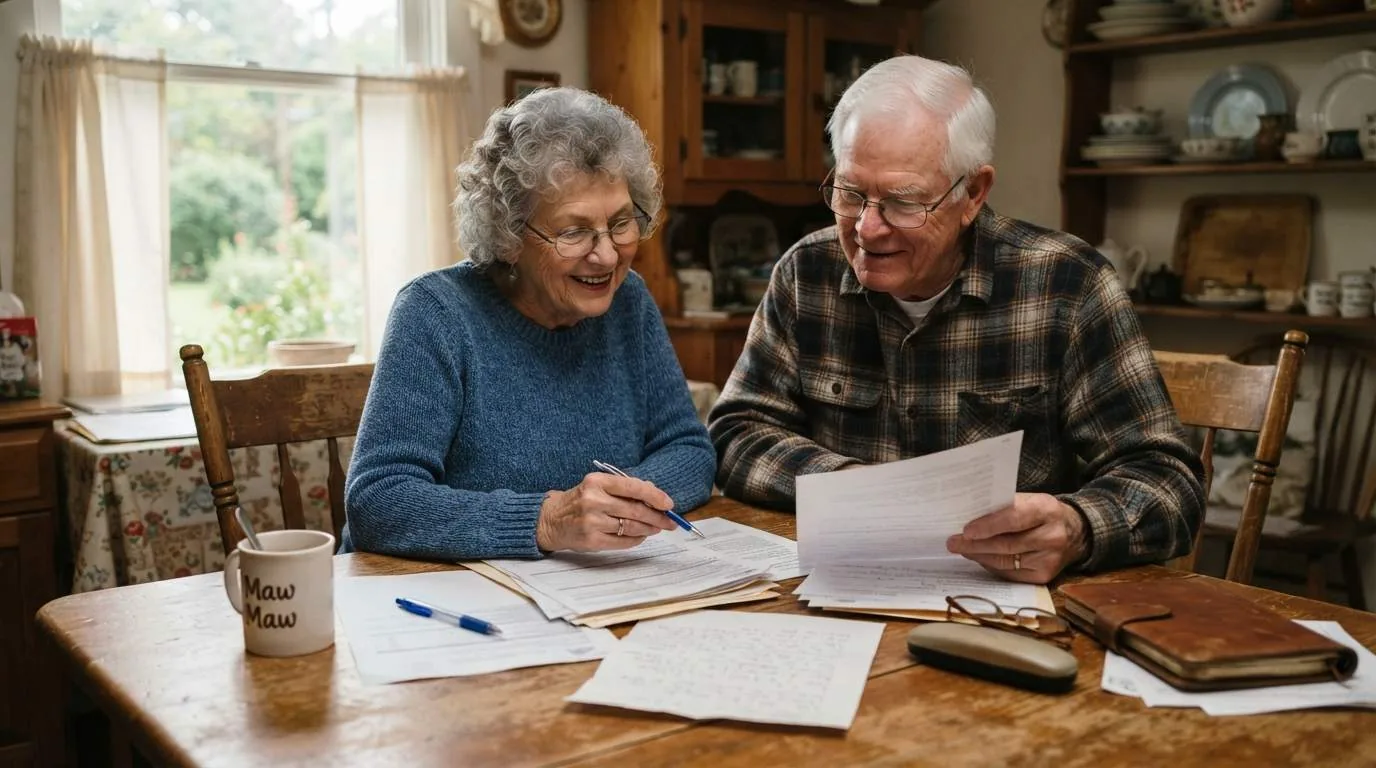
No transfer-on-death deed for real estate. Alabama has not adopted TOD deeds, making a trust more valuable here than in most states. Two witnesses required for a valid will. Alabama's execution statute has no handwritten exception. Blended-family spouse gets only half. Under intestacy, a surviving spouse with stepchildren receives one-half — not the whole estate. Each of these changes which tool works for your situation.
The vocabulary — three different things
| Document | Will | Trust | Estate plan |
|---|---|---|---|
| What it is | A document directing who receives your property at death | A legal arrangement where a trustee holds title for beneficiaries | The whole set of documents — will or trust is one part |
| When it operates | Only at death | During life AND at death | Both |
| Probate | Goes through probate | Assets in the trust avoid probate | Depends on the components |
| Public record | Yes — a probated will is a public filing | Generally private | Mixed |
| Handles incapacity | No — a will does nothing while you are alive | Yes — through the successor trustee | Yes — via power of attorney and directive |
| Names a guardian for minor children | Yes — only a will does this | No | Via the will |
| Cost to create | Lower | Higher | Varies |
| Ongoing maintenance | None required | Requires funding and maintenance | Requires periodic review |
The distinction people miss most often: A will does nothing while you are alive. It has no legal effect until it is admitted to probate after your death. That means a will provides no help at all with the situation most families face first — incapacity. Someone has a stroke, and the family discovers there is no power of attorney. That gap is why an estate plan is a broader term than a will, and why the incapacity documents are often the most-used part of any plan.
Alabama will requirements
| Requirement | Alabama rule |
|---|---|
| Minimum age | 18 or older, of sound mind (§ 43-8-130) |
| In writing | Required (§ 43-8-131) |
| Witnesses | At least two adult witnesses, signing in the testator's conscious presence (§ 43-8-131) |
| Notarization | Not required for a standard witnessed will |
| Self-proving affidavit | Optional but strongly recommended (§§ 43-8-132, 43-8-133) |
The self-proving affidavit — a small step that saves real trouble
A self-proving affidavit is signed by the testator and both witnesses before a notary at the time of signing. What it buys: it significantly speeds up probate by eliminating the need to locate witnesses later. A will signed at 45 and probated at 88 requires finding two witnesses who may have moved, lost touch, or died. That is a real and common delay. The affidavit costs almost nothing at execution. Ask for it.
Handwritten wills — sources conflict, this is consequential
Alabama's execution statute at § 43-8-131 requires two witness signatures for every will and contains no handwritten exception. Two authoritative sources — Settled Estate and the Alabama Legal Services Authority — confirm that an unwitnessed handwritten will made in Alabama is void regardless of the testator's expressed intent. A third source states the opposite, and appears to be an error. If someone relies on the wrong answer and leaves only a handwritten unwitnessed will, the estate likely passes as if there were no will at all. Verify this point with an Alabama attorney. Do not rely on any web source, including this one.
There is one narrow path: a holographic will validly made in a state that permits them can be admitted in Alabama under the choice-of-law rule at § 43-8-135. A handwritten will made in Alabama by an Alabama resident cannot.
What a will does NOT control
A will governs probate assets only. It does not override:
- Beneficiary designations on life insurance, retirement accounts, and annuities — the designation wins, always
- Pay-on-death and transfer-on-death account registrations
- Jointly owned property with right of survivorship
- Property already titled in a trust
This is the most common estate planning failure: a carefully drafted will and a beneficiary designation from a prior decade pointing somewhere else. The designation governs. Review your beneficiary designations — on every account, every policy, every retirement plan — before and after you sign any estate planning documents.
Alabama's most important structural fact — no TOD deed
Alabama has no transfer-on-death deed for real estate. Alabama has not adopted the Uniform Real Property Transfer on Death Act. There is no recorded deed instrument that transfers Alabama real property automatically at death outside probate. Alabama also does not allow transfer-on-death registration of vehicles.
In states with TOD deeds, a homeowner can avoid probate on their primary asset with a single recorded document costing very little. In Alabama that option does not exist. That absence is the strongest practical argument for a revocable trust here — stronger than it would be in a state that has TOD deeds.
What Alabama does allow for avoiding probate on specific assets:
| Asset type | Available in Alabama? |
|---|---|
| TOD deed for real estate | Not available |
| TOD registration for vehicles | Not available |
| TOD / beneficiary registration of brokerage accounts and securities | Available — §§ 8-6-140 through 8-6-151 |
| Pay-on-death bank accounts | Available — standard non-probate transfer |
| Beneficiary designations on life insurance, retirement accounts, annuities | Available — pass outside probate to named beneficiary |
| Joint tenancy with right of survivorship | Available — but deed must expressly create it, and carries consequences during life |
| Revocable living trust | Available — the primary probate avoidance tool in Alabama for real property |
Check your deed first. Survivorship language on an existing deed may mean the transfer is already handled for that property. It costs nothing to pull the deed and read it, and it can change the entire plan.
What happens with no will — Alabama intestacy
Dying without a will in Alabama means the state's intestate succession laws determine who inherits. The results surprise most people, particularly blended families.
| Situation | Result under Alabama intestacy |
|---|---|
| No surviving children or parents | Surviving spouse takes the entire intestate estate (§ 43-8-41(1)) |
| Surviving spouse, all children are also the spouse's | Spouse gets the first $50,000 plus half the remaining estate. Children share the rest. |
| Surviving spouse and children from a prior relationship | Spouse receives only one-half. Children from the prior relationship split the other half. |
| No spouse — children survive | Property passes to descendants first |
| No spouse, no descendants | Passes to parents, then siblings, then more remote relatives (§ 43-8-40) |
| No family at all | Escheats to the state (§ 43-8-44) |
| Heir must survive by | Five days (§ 43-8-43) |
The blended family result is the one that shocks people. If you are married with children from a previous relationship and die without a will in Alabama, your spouse receives only half. Your children from the prior relationship split the other half. This frequently produces disputes about the house the surviving spouse lives in — because legally, the spouse owns half and the stepchildren own the other half. If your family has this structure, intestacy is very unlikely to produce the result you want, and it is very likely to produce conflict. This is the fact pattern where estate planning stops being optional.
What an estate plan actually contains
An estate plan is not one document — it is a set of documents addressing different situations. Most of them operate while you are alive.
| Document | What it does | Why it matters |
|---|---|---|
| Will | Distributes probate assets. Names a personal representative. Nominates a guardian for minor children. | The guardian nomination alone justifies a will for any parent of young children. |
| Revocable living trust | Holds title to assets; successor trustee manages at incapacity or death | The main probate avoidance tool in Alabama given the no-TOD-deed rule |
| Durable power of attorney | Authorizes someone to handle financial and legal matters if you cannot | Prevents a conservatorship proceeding. Frequently the most-used document in the whole plan. |
| Advance directive for health care | Living will plus health care proxy — medical decisions and end-of-life wishes | Alabama has a statutory form. Without one, a family crisis becomes a legal one. |
| HIPAA authorization | Allows named people to receive your medical information | Blocks a real practical obstacle for no meaningful cost |
| Beneficiary designation review | Ensures retirement accounts, life insurance, and annuities point where you intend | These override your will. They must be reviewed. |
The incapacity documents are the ones families actually need first. Statistically, incapacity comes before death for most people. Without a durable power of attorney, a family facing a stroke or dementia diagnosis may have to petition the probate court for a conservatorship — a public, expensive, ongoing court process to obtain authority the person could have granted in an afternoon. If budget forces a choice, many attorneys put the power of attorney and advance directive ahead of the trust.
Will or trust? The Alabama answer
| Consideration | Points toward a will | Points toward a trust |
|---|---|---|
| Own real property in Alabama | — | Strong — no TOD deed exists here |
| Own real property in another state | — | Strong — avoids ancillary probate in that state |
| Assets mostly accounts with beneficiary designations | Those already avoid probate | — |
| Estate under small estate threshold, no real property | Yes | — |
| Want privacy | — | A probated will is a public filing |
| Want incapacity management of assets | — | Successor trustee steps in automatically |
| Blended family | — | Trusts handle staged and conditional distributions better |
| Beneficiary with a disability | — | Special needs planning is trust work |
| Minor children | Will — guardian nomination | Trust — for holding children's assets until they reach an appropriate age |
| Want the creditor claim bar from probate | Probate produces a clean cutoff after which creditors are barred (§ 43-2-350) | Trust administration does not automatically produce that same bar |
| Budget constrained | Lower cost | Higher cost |
| Will not maintain it | Will — no funding required | An unfunded trust does nothing |
An unfunded trust is an expensive piece of paper. A trust only avoids probate for assets actually titled in the trust. Creating the document is half the job — funding it is the other half. That means recording a new deed for real property, retitling accounts, and updating designations where appropriate. The most common trust failure is a properly drafted trust with the house still in the individual's name — which puts the house through exactly the probate the trust was bought to avoid. Ask your attorney directly: what do I have to do to fund this, who does it, and is it included in the fee?
Most people need both
The usual structure for an Alabama family with real property is a revocable trust for the assets, plus a pour-over will that catches anything not titled in the trust and nominates a guardian for minor children, plus the incapacity documents. The question is rarely will or trust — it is whether a trust is warranted alongside the will.
Alabama-specific mistakes to avoid
| Mistake | Consequence |
|---|---|
| Relying on a handwritten unwitnessed will | Void under Alabama law — estate passes as if there were no will |
| Not getting the self-proving affidavit at signing | Witness-hunt problem at probate, decades later |
| Creating a trust without funding it | The assets go through the probate the trust was bought to avoid |
| Assuming beneficiary designations match the will | Designations override the will — the old designation controls |
| Blended family with no plan | Spouse takes only one-half under Alabama intestacy |
| No durable power of attorney | A conservatorship proceeding may be the only route to authority |
| Leaving real property unadministered across generations | Fractional heirs multiply and title becomes very difficult to clear — the mechanism behind heirs' property |
| Using a form from another state | Execution requirements and available tools differ — Alabama's two-witness rule and no-TOD-deed rule are the main distinctions |
| Not reviewing the plan after a major life event | An outdated plan can create many of the same problems as not having a plan |